
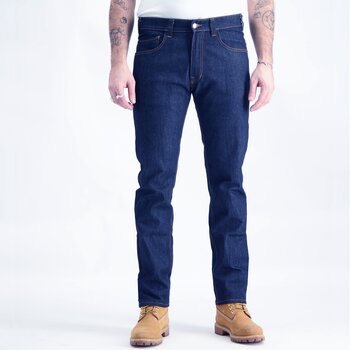
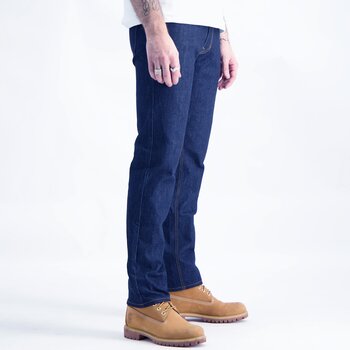
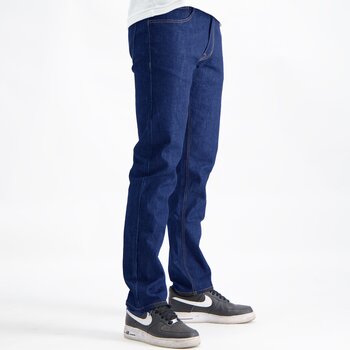
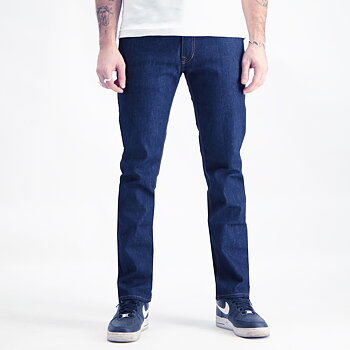
organic jeans
Jeans are made of denim and denim is historically woven from cotton yarn that is made from the cotton plant that is grown in warmer latitudes, China grows most cotton followed by India, USA and Brazil.



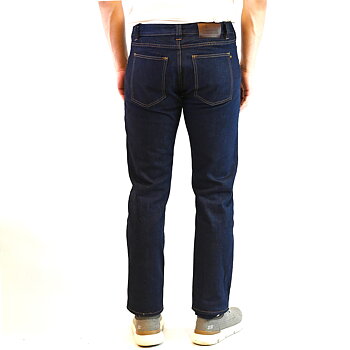

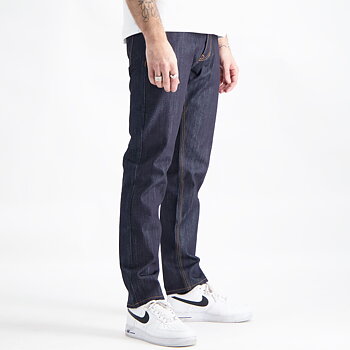
Cotton cultivation requires large amounts of water, fertilizer and pesticides, to grow one kg of cotton you need between 9-20000 liters of water a little depending!
About 25% of all pesticides are used for cotton crops, this is obviously a major problem as the surrounding environment and water are polluted by these agents.
Organic production is about producing in a long-term and sustainable way - from soil to finished goods. To do this, you need to use natural resources such as soil, energy and water in a way that affects the environment as little as possible.
Organic production must also support biodiversity and safeguard nature's health and well-being.
By buying clothes that are made of organic cotton, emissions of pesticides and certain types of fertilizers are reduced, which will hopefully lead to a better environment and if you choose other materials such as cellulose-based fabrics, there are many different alternative raw materials that you can use instead of cotton. , Tencel, Lenzing, Lyocell are some brands of fabrics / yarns / fibers made from cellulose from, among other things, recycled fabrics, trees and other plants, there is also recycled cotton which can also be a more environmentally friendly alternative, but it is not obvious that a recycled material is more environmentally friendly than a newly produced one if you count the energy consumption to recycle and what kind of energy you use, the life of the recycled material compared to the new one also needs to know before you get the total environmental impact that arises!
About 25% of all pesticides are used for cotton crops, this is obviously a major problem as the surrounding environment and water are polluted by these agents.
Organic production is about producing in a long-term and sustainable way - from soil to finished goods. To do this, you need to use natural resources such as soil, energy and water in a way that affects the environment as little as possible.
Organic production must also support biodiversity and safeguard nature's health and well-being.
By buying clothes that are made of organic cotton, emissions of pesticides and certain types of fertilizers are reduced, which will hopefully lead to a better environment and if you choose other materials such as cellulose-based fabrics, there are many different alternative raw materials that you can use instead of cotton. , Tencel, Lenzing, Lyocell are some brands of fabrics / yarns / fibers made from cellulose from, among other things, recycled fabrics, trees and other plants, there is also recycled cotton which can also be a more environmentally friendly alternative, but it is not obvious that a recycled material is more environmentally friendly than a newly produced one if you count the energy consumption to recycle and what kind of energy you use, the life of the recycled material compared to the new one also needs to know before you get the total environmental impact that arises!