
CHOICE BETWEEN THREE FITS

Jeans have become the universal trousers of our time, today jeans are used in everyday life at work and for more festive occasions!
The number of models and variants is almost infinite if you look at the big retailers and it is not always easy to know what to buy.
In our jeans guide, we go through some basics and basic models that can be helpful when updating your wardrobe.Fit and comfort are what most people value most in a look that you like, of course, then price and quality / durability.
Prices vary greatly, premium jeans are around EUR 130-180 on average while you can find low-priced jeans for about EUR 30 at regular prices, an average on the market is around EUR 60.
HISTORY
WASHES&TREATMENTS
FABRICS
JEANS FITS
TO BUY JEANS
CARE & WASHING
HISTORY
The name of the denim fabric "Denim" comes from the city of Nimes, which already in the 18th century made cotton fabrics in blue tones of twill weave or twill (diagonal weave) as it is usually said today! "Indigo" which was cheap and gave a nice blue color was used extensively and comes from the indigo plant.
Sailors from Genoa were called "Jeans" by the Americans when they came with the boats and their trousers are believed to be a model for Levi Straus and Jacob Davis when they developed their first "gold digger trousers" in the early 1870s.
At first, the durable work trousers were made of hemp in its brown natural color, but later Levi´s switched to blue cotton fabric in the manufacture that they called "Serge de Nimes" (twill from Nimes) it was simplified by the Americans and became "Denim" instead. This combination became very popular as it was softer than hemp, finer color and still durable.
n the 1930s, the concept of Jeans came to Europe and it was not until the end of the 1940s that men's jeans began to be made in Europe.
FABRICS
Denim is a woven fabric that is a twill, made of cotton yarn.
You often use colored warp and uncolored weft, which gives the lighter and diagonal pattern on the back that you recognize in denim. Read more about denim
Selvedgedenim comes from old looms where the edges become firm and nice, but they were smaller so the fabrics were only about 60-80cm wide. Levi´'s old selvedge jeans are characterized, for example, by a red stripe along the edges for a period.of time.
When modern looms were developed, the old ones were gradually replaced as the new ones produced double the width at the same time..
The Japanese discovered these old looms sometime in the 1980s and liked the fine quality they wove. They gradually bought most of what was for sale from the Americans and have developed the qualities further
What characterizes selvedgedenim is its solid edges that are visible when you unfold the trouser legs and its raw character that shapes and wears in nicely as the trousers are used. Most selvedge jeans are in 100% cotton and are sold completely untreated (raw denim) or possibly with a rinse to get out excess color, shrinkage and a softer trousersRead more about selvedge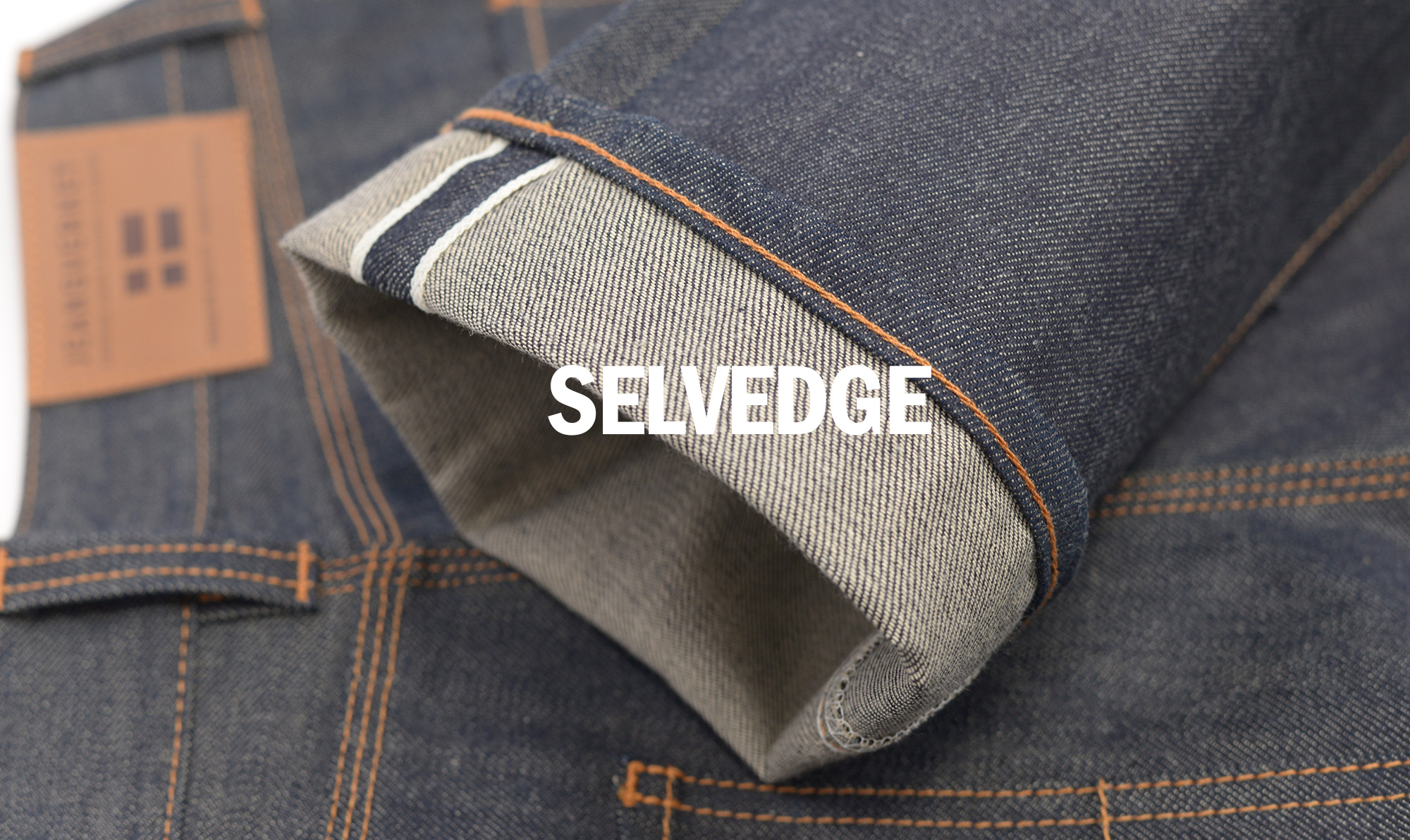
WASHES AND TREATMENTS
Stone washing, rinsing, bleaching and fake wear
Unwashed jeans are often called raw or dry, they can be stiffer and shed more than jeans that are treated differently.
Stone washing is done with the help of pumice stone historically and is performed on very many jeans to get a worn used look, it can be in combination with other wear treatments such as wear folds and worn knees / thighs that can be performed with manual wear on the fabric.
Rinsewash is a rinse that you often need to do on stretch denim as it tends to shrink a lot when it is newly produced, the stretch is stretched on the fabric rolls and contracts after washing, this varies slightly from quality to quality.
Bleaching is often done in connection with stone washing, then you supplement with bleach in the wash to get a lighter pants.
Wear creases and abrasions are performed manually and are different types of mechanical and chemical abrasion on the fabric to obtain the desired wear / appearance.
In recent times, laser treatment has become increasingly common, which is effective and saves the work environment, water and the use of chemicals. However, lasers are not able to produce tears everywhere on the trousers, so some form of stone wash or enzyme wash still needs to be performed to wear down protruding edges, etc.
For a few years now, new washing treatments have started to come with, among other things, ozone that bleaches and wears down the denim fabric to the desired appearance, which is said to save a lot on water and the environment.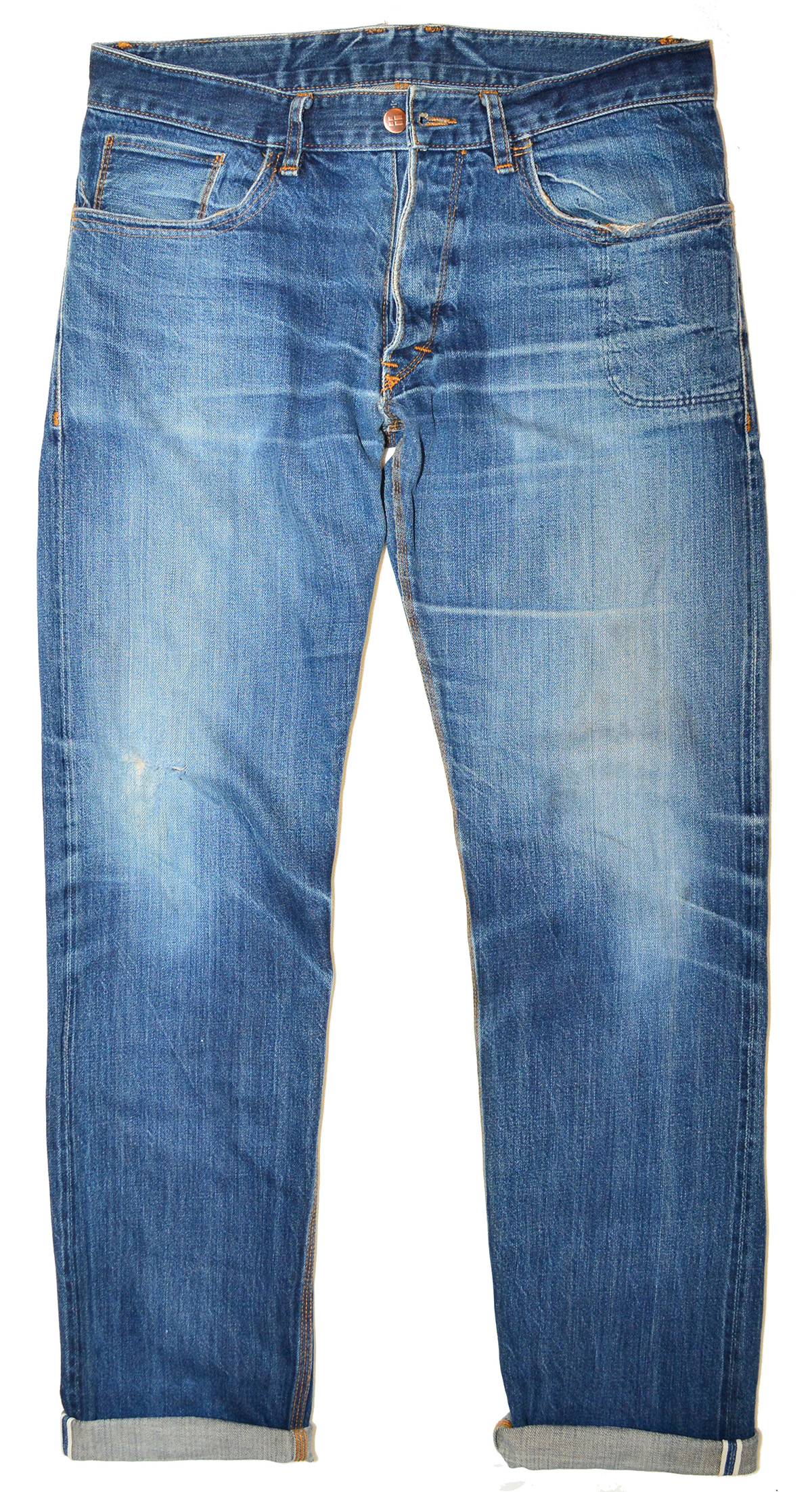
jeans fits
Slim-fit is a slim fit often below the knee but also on the thighs, what characterizes slim is precisely the tapered shape with a tight foot width but still comfortable to wear unlike a "tight skinny" that almost sits as a training tights on the body. To get a comfortable fit, you use stretch in the denim fabric, what varies is often the thickness of the fabric in combination with a percentage of stretch yarn, which gives different "flex" in the material.
Regular (tapered) is a little wider in the leg but still slightly tapered and gives a little more forgiving silhouette than a slim that tightens a little more against the body, this fit works for most people, especially if it is 1-2% stretch.
Klassisk is a straight wide fit that has been around since the 1950s, often in 100% cotton, but with 1-2% stretch, you get a comfortable pair of trousers with good range from the start, without stretch it usually takes up to six months to go into the trousers. before it forms and becomes really comfortable.
Loose fit is even wider than classic, it is not so common on the men's side.
Another important detail when it comes to fit is the height of the waist. Low, medium or high waist affects quite a lot depending on body shape. Medium "waist" is a classic waist that suits many and usually fits well on most, low waist has previously been popular as it was modern with the pants hanging at the hip. High waist gets a little more stylish expression if you want to be a little more dressed.
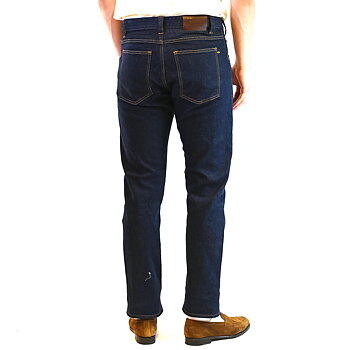
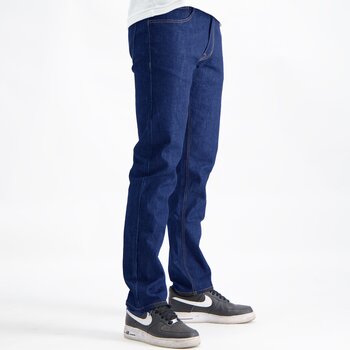
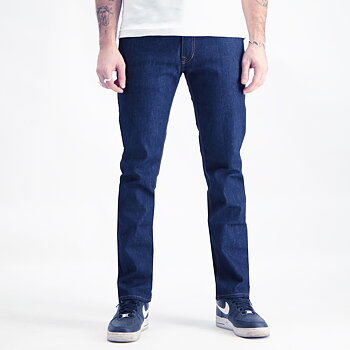
If you want the pants to keep the fit well even after a day of use, it should be a quality that is at least 11oz in thickness and 1-2% stretch (elastane, spandex, lycra) it is more stretch or thinner fabric so the pants tend to stretch and become baggy as they are used but they return to their origin after washing normally. The picture shows our Slim-Regular-Classic side by side
to buy jeans
Buying jeans is not always the easiest thing to do, but first you need to decide what color tone you want, wear or not and a little general what you like when it comes to buttons, zipper, rivets and embroidery
Think about what to wear at the top! A straighter pair of trousers is often better suited if you are going to wear a jacket and a lighter pair of trousers fits nicely as casual with knitted sweaters and loose garments.
Fit by body type is something you can keep in mind, if you have slightly stronger legs, it will often look better if you choose a regular or classic model that evens out the shape more than a tighter pair of trousers.
If you have slightly shorter legs, a high waist can lengthen the legs visually and vice versa if you are tall.
A lower waist can cause the trousers to come below the abdomen, which is then more visible than if you use a model with a higher waist that encloses the place of the natural waist.
If you are slim, a regular fit can give a little more volume while a tighter model slims to the look extra.
We recommend stretch if you want a slightly tighter fit, but even a regular and classic one fits nicely with 1-2% stretch without losing the fit if you choose a good quality.
If you want more stretch 3-6%, they lose the fit a little faster, but the comfort is more comfortable if, for example, you have to move a lot in the pants. If you wash them, they go back again.
The waist is important when trying on trousers, it must not be too big, if it is a bit tight, it stretches over time, especially if there is stretch in the jeans but even a cotton trousers comes with it after a few months.
Leg length is a matter of taste, but it can be good to keep in mind that jeans in 100% cotton shrink a bit in length and especially raw denim in selvedge, sometimes 1-2 length sizes but normally 1-2 cm a little depending on quality
If you want to have sneakers, it's nice if the trousers go to the ankles, a nicer shoe or boot can go down to the heel, try some favorite trousers with shoes on and measure and look in the measurement table if there is one, you get a good feeling or you measure man directly on the favorite leg's inner leg lengthSizeguide
ATTENTION! Important to think about sizes is that it varies between different jeans brands, a W34 in one jeans brand can be a W36 in another! We recommend that you measure your favorite trousers in the waist, thigh and leg length, so you usually end up more correct from the start.
Sizes of jeans are called in inches, the first number 32 "is the waist (W) measurement and the second 30" leg length (L) is thus 32/30 which are common designations for jeans but also other trousers.
Size help: Height and weight are usually a general indication of what size to have, then factors such as strong thighs/legs or belly flesh can of course affect the need to increase in size.
Here we try to indicate a little approximately where it usually is in terms of size with weight and length as a reference.
| Jeans size | Waist 28-29 Length 27-31 |
Waist 30-31 Length 28-32 |
Waist 32-33 Length 30-35 |
Waist 34 Length 31-36 |
Waist 36 Lenght 31-36 |
Waist 38 Length 31-36 |
| Weight | 60-70 kg | 70-80 kg | 80-90 kg | 90-100 kg | 100-110 kg | 110-120 kg |
| Height | 160-175 cm | 165-180 cm | 180-195 cm | 180-200 cm | 180-200 cm | 180-200 cm |
| Single size | 46 (XS) | 48 (S) | 50 (M) | 52 (L) | 54 (XL) | 56 (XXL) |
These measurements are approximate based on our pants and a man's general body measurements. To ensure size, measure your wasit, your height and your weight to see where in the size chart your body measurements fit best. If you are relatively tall and thin, you may need to go down one size.
care & washing
Take care of your favorite jeans and they will last longer! See our care guide for how to take care of your jeans and preserve their original color longer.Care-guide.
GO TO OUR JEANS