
The jeans blog
In our blog, we will try to address various topics and questions that arise when you are trying to find your new favorite garment, but also how the manufacturing takes place in our factory and some about the different materials that are used.
What are premium jeans?
What are premium jeans?
Premium jeans can be described as elaborate and high-quality jeans with high comfort, good fit and stylish design in the finest materials. Often they come from a well-known fashion brand and are in the higher price range…
How do I know what are premium jeans?
Not easy to know, but material selection, price and country of manufacture can give a good indication, established premium brands are often a guarantor of higher quality, you can often tell by the sewing if they are well made and stylish and a nice fit that fits between different sizes...
Are expensive jeans premium jeans?
All expensive jeans are far from premium jeans, unspecified fabric qualities, manufacturing in low-cost countries and variable fit also occur in more expensive jeans, with brands that do not mainly work with jeans but are in the premium segment, you should check and review a little extra before purchasing, if you want to make sure you get a quality product...
Why should I buy premium jeans?
The established jeans brands often have a greater history and knowledge when it comes to manufacturing quality jeans in good fits, the material choices are generally of higher quality and have less environmental impact than cheaper jeans, which in the end can pay off as the jeans maintain fit and quality over time.. .
Example of premium jeans

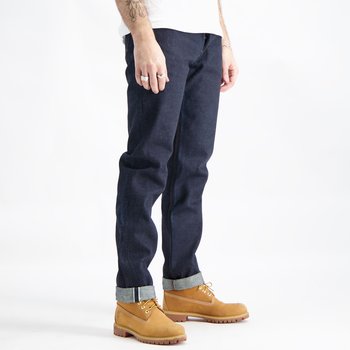
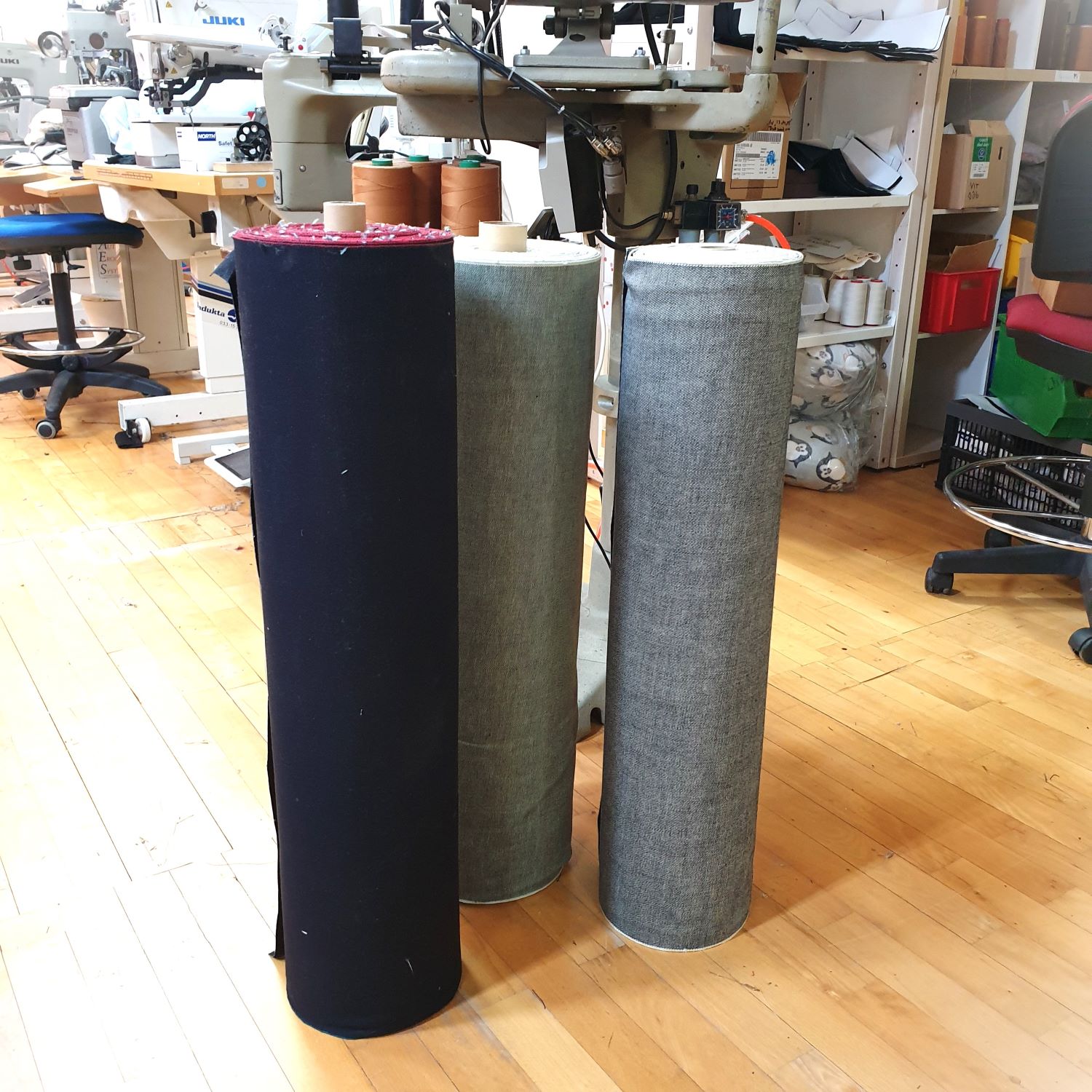
Above we show three different jeans in exclusive denim of different quality and thickness.
JV003-13 in recycled cotton/Lenzing selvedge denim from Italian Candiani.
JV003-12 in Japanese selvage denim in American cotton from Kurabo.
JV003-19 in Japanese heavy selvedge denim in American cotton from Kurabo
JV003-13 in recycled cotton/Lenzing selvedge denim from Italian Candiani.
JV003-12 in Japanese selvage denim in American cotton from Kurabo.
JV003-19 in Japanese heavy selvedge denim in American cotton from Kurabo
what is selvedge denim?
What is Selvedge denim?
Selvedge denim is a denim fabric with fine edges, you keep the fine edges when you cut the front and back of the jeans, which are then sewn together usually on the outer legs and give a nice decorative inside that is visible when folded up. Selvedge denim mainly comes from old shuttle looms that are narrower ( 60-80cm width) than modern looms (150-165cm)
Why is selvedge denim often more expensive?
It is woven on old looms that weave narrower fabric widths which means productivity is lower and they also need more supervision, combine this with the fact that the yarn used is often of a higher quality, and the whole process from warping to dyeing becomes more costly.
Why do they make selvedge denim?
The old shuttle looms weave a dense and fine weave that becomes strong and durable and often gives a certain character as they are not as precise as modern new looms while still getting the fine staid edges, the yarn is often dyed with true indigo which gives the fabric a nice patina which is difficult to imitate as it is used and worn.
What are selvedge?
It is simply the nice woven edges of the fabric and is called "selvedge" in English
Why Japanese selvedge denim?
The Japanese took interest in the old looms that had been forgotten and started weaving and optimizing the old machines, after a while the demand started to pick up when discovering the amazing denim fabrics they wove and it became more and more commercial to make jeans with the Japanese selvedge denim, you can probably say that it is in Japan that the finest selvedge denim is produced today, although it is made in many other places too!
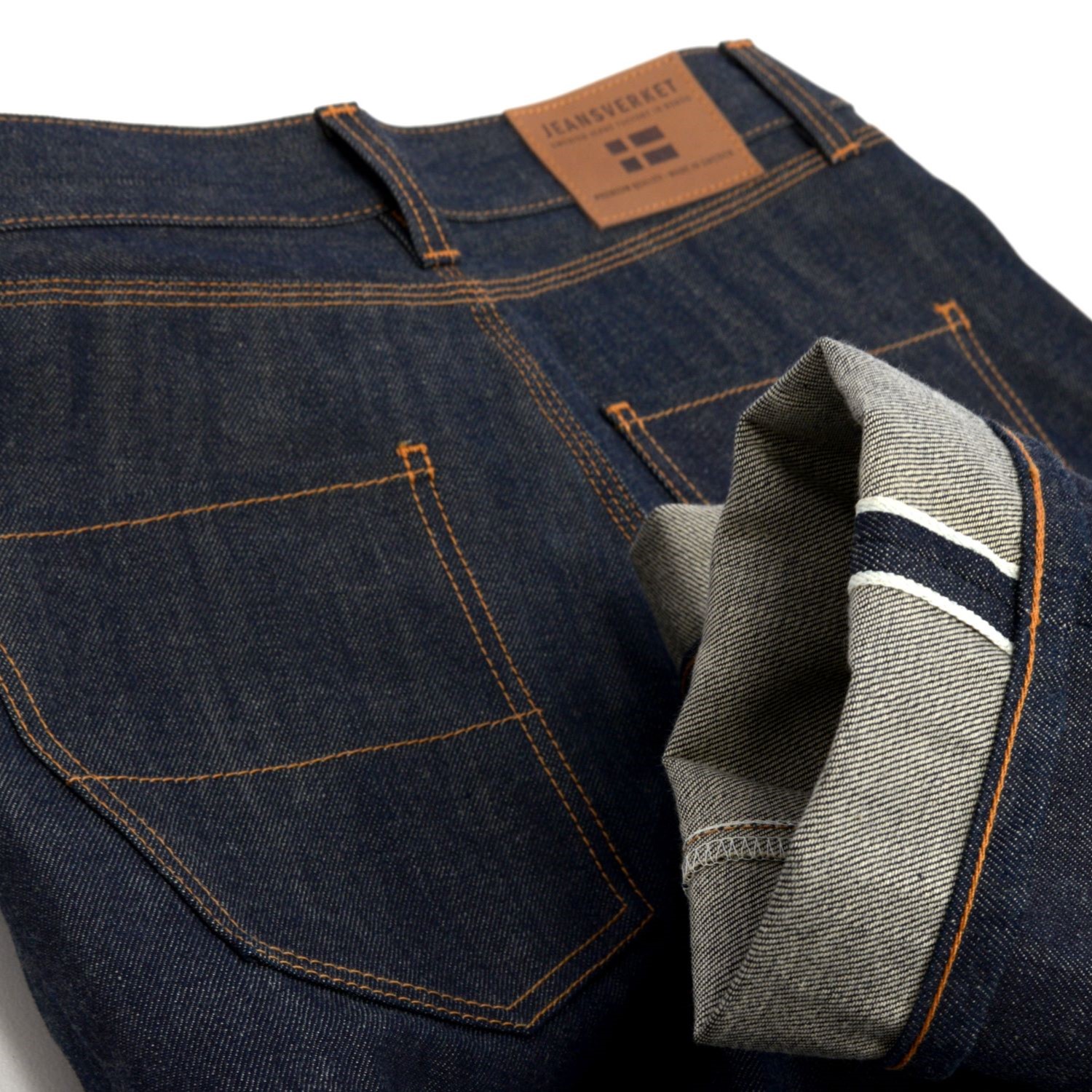
Selvedge denim is a denim fabric with fine edges, you keep the fine edges when you cut the front and back of the jeans, which are then sewn together usually on the outer legs and give a nice decorative inside that is visible when folded up. Selvedge denim mainly comes from old shuttle looms that are narrower ( 60-80cm width) than modern looms (150-165cm)
Why is selvedge denim often more expensive?
It is woven on old looms that weave narrower fabric widths which means productivity is lower and they also need more supervision, combine this with the fact that the yarn used is often of a higher quality, and the whole process from warping to dyeing becomes more costly.
Why do they make selvedge denim?
The old shuttle looms weave a dense and fine weave that becomes strong and durable and often gives a certain character as they are not as precise as modern new looms while still getting the fine staid edges, the yarn is often dyed with true indigo which gives the fabric a nice patina which is difficult to imitate as it is used and worn.
What are selvedge?
It is simply the nice woven edges of the fabric and is called "selvedge" in English
Why Japanese selvedge denim?
The Japanese took interest in the old looms that had been forgotten and started weaving and optimizing the old machines, after a while the demand started to pick up when discovering the amazing denim fabrics they wove and it became more and more commercial to make jeans with the Japanese selvedge denim, you can probably say that it is in Japan that the finest selvedge denim is produced today, although it is made in many other places too!
what is raw denim?
What is raw denim?
Today, raw denim is a broad term for all dark jeans, but actually it is denim fabric or jeans that are used directly after the yarn has been dyed and the fabric has been woven, the raw fabric that comes directly from the looms is often a bit stiff and contains both dye and starch from dyeing and weaving. Another name for these jeans are "Dry Jeans"
What is the difference between raw denim and treated bleached denim?
Lighter jeans are raw when they are manufactured and then undergo various treatments such as stone washing, bleaching and laser treatment. This makes the denim thinner and softer.
Why buy raw denim?
Some reasons to buy distressed denim are, for example, the dark color, longer durability and a more robust feel, as well as the possibility of wearing in your jeans yourself and giving them a patina...
Is raw denim better for the environment?
Yes, if the jeans are not treated and washed, there will be less environmental impact and increased durability...
Why does raw denim shed color?
The denim fabric has some excess color that is not washed out when the fabric is woven, this can discolor by drying when it comes into contact with different materials, but after a few washes the excess usually disappears...
Today, raw denim is a broad term for all dark jeans, but actually it is denim fabric or jeans that are used directly after the yarn has been dyed and the fabric has been woven, the raw fabric that comes directly from the looms is often a bit stiff and contains both dye and starch from dyeing and weaving. Another name for these jeans are "Dry Jeans"
What is the difference between raw denim and treated bleached denim?
Lighter jeans are raw when they are manufactured and then undergo various treatments such as stone washing, bleaching and laser treatment. This makes the denim thinner and softer.
Why buy raw denim?
Some reasons to buy distressed denim are, for example, the dark color, longer durability and a more robust feel, as well as the possibility of wearing in your jeans yourself and giving them a patina...
Is raw denim better for the environment?
Yes, if the jeans are not treated and washed, there will be less environmental impact and increased durability...
Why does raw denim shed color?
The denim fabric has some excess color that is not washed out when the fabric is woven, this can discolor by drying when it comes into contact with different materials, but after a few washes the excess usually disappears...
how denim is made
1. Raw materials
The cotton plant or other plant-based raw material such as hemp, bamboo or wood fiber, these can be combined with polyester and elastane to get increased wear resistance and a more stretchy material.
The raw material is carded out to a thin fine mesh and at the same time cleaned of dirt etc.
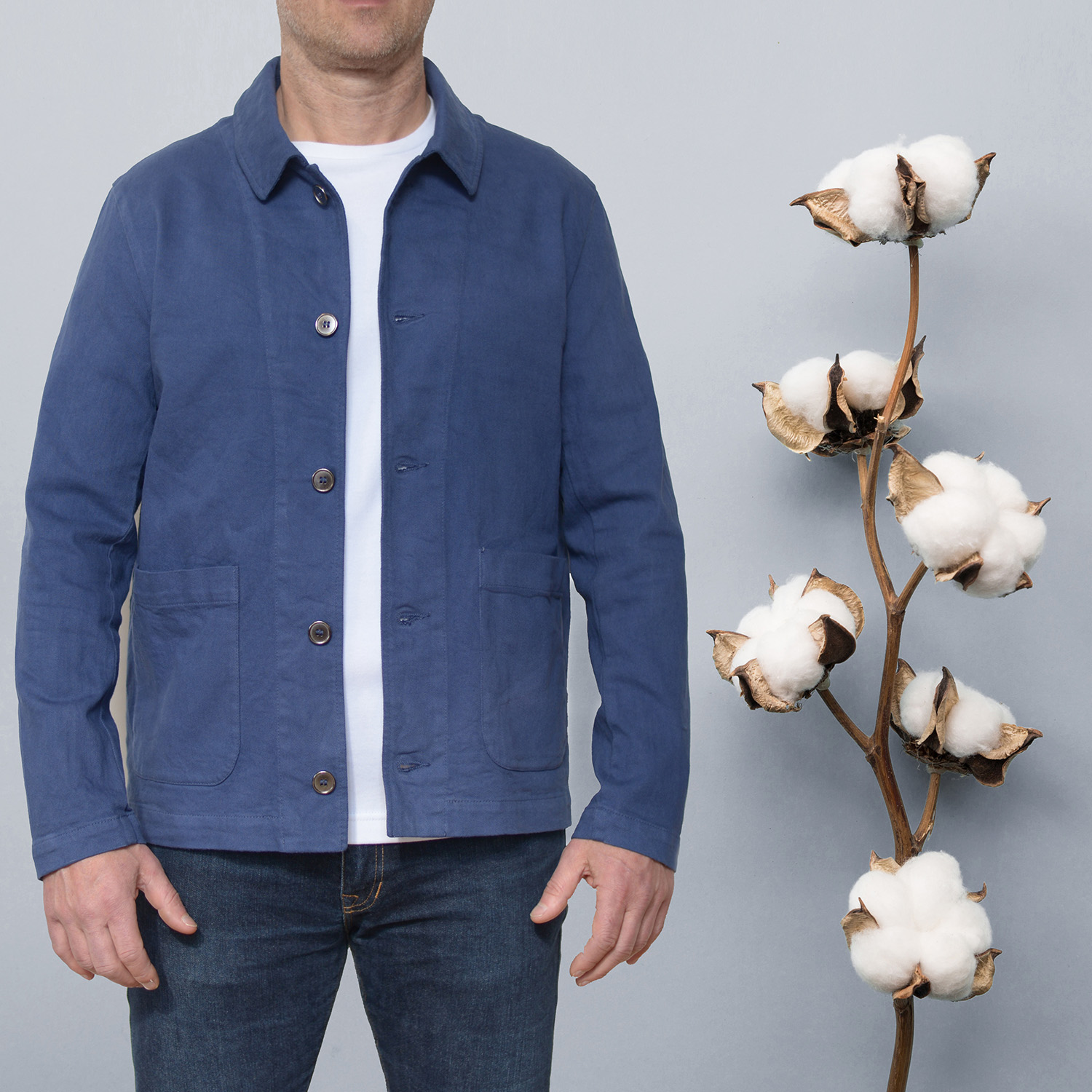
The cotton plant or other plant-based raw material such as hemp, bamboo or wood fiber, these can be combined with polyester and elastane to get increased wear resistance and a more stretchy material.
The raw material is carded out to a thin fine mesh and at the same time cleaned of dirt etc.
2. Spinning, after carding and cleaning, you can begin to intertwine the fine fibers into thin threads by spinning them. This is done in a few steps until you get yarn on rolls.
When making the yarn, you can mix in different materials to get different properties such as stretch or cotton/viscose etc...
3. The yarn is dyed in a denim color, alternatively you can set up a warp (many threads in parallel) which you dye, then the yarn is treated with starch so that it is easier to weave.
4. Weaving, with a colored yarn and a lighter yarn, the warp that is put in the loom is interlaced with thread (weft). The weaving technique used for denim is twill and is woven more diagonally than two shafts that are woven completely perpendicularly, for example canvas.
5.Finally, when the fabric is woven, it can be treated in different ways to obtain different properties. Common is sanforization, which shrinks the fabric, but there can also be other treatments that wash or coat the fabric with protection against, for example, dirt or other things.
When making the yarn, you can mix in different materials to get different properties such as stretch or cotton/viscose etc...
3. The yarn is dyed in a denim color, alternatively you can set up a warp (many threads in parallel) which you dye, then the yarn is treated with starch so that it is easier to weave.
4. Weaving, with a colored yarn and a lighter yarn, the warp that is put in the loom is interlaced with thread (weft). The weaving technique used for denim is twill and is woven more diagonally than two shafts that are woven completely perpendicularly, for example canvas.
5.Finally, when the fabric is woven, it can be treated in different ways to obtain different properties. Common is sanforization, which shrinks the fabric, but there can also be other treatments that wash or coat the fabric with protection against, for example, dirt or other things.
Which jeans are best for the environment?
Choosing the most environmentally friendly jeans is perhaps a question that many people think about! Here we will try to shed some light on different aspects of this question and then it's up to you to think about what you think is best for the environment before deciding which jeans you want.
We start with the raw material, here is still newly produced cotton yarn stronger than recycled and the best durability comes from so-called long-stapled cotton or long fibers that allow you to get fewer joined fibers when they are twisted and thus get smoother and stronger thread, which makes the yarn stronger and softer. When recycled, the fibers are broken and become shorter and shorter, which has the opposite effect on durability.
Stretch in cotton yarn impairs durability as stretch thread, which is often twisted together with cotton thread into yarn, is broken down faster by washing and abrasion and loses elasticity, while the denim fabric is stretched more during use, which gives higher stress and thus becomes more sensitive to damage to the yarn / fabric. It is not uncommon to mix polyester or other synthetics into stretch fabrics to improve durability.
The fabric! You might think that the thicker the denim the more durable but unfortunately it is not really so, a tightly woven denim fabric between 12.5-15oz is usually said to have optimal durability and higher yarn density than a really thick denim over 15-16oz, the coarser yarn scratches more easily, which makes it more vulnerable in a pant that is stressed during use ...
There are many different "variants" of denim where you mix cotton with different materials, common ones are for example cotton / cellulose or hemp then there are also denim-like fabrics for example in only hemp but our experience of these is limited, what we have tested at Jeansverket are some different recycled qualities that we so far do not think hold the same high durability as primary cotton.
Our advice is to look at the denim weaving mill's website if you want to know more about dyeing and preparation of cotton and fabric during the manufacturing process, those who use modern equipment reduce a lot of water use as these processes take place in closed systems that are also taken care of and purified before being discharged into watercourses. Some indicate how much water is used in manufacturing and some also CO2 emissions, where it can be interesting to note whether it is renewable energy or fossil-free energy that is used.
About 80% of a pair of jeans' environmental impact occurs when the fabric is produced, the rest is distributed on freight, if they are washed / finished, accessories such as zippers, buttons, etc...
When we talk about environmental impact, it can also be good to think about where it is manufactured, for example, within the EU there are environmental laws that must be met, what environmental laws are in other parts of the world?
This blog post is under development...
We start with the raw material, here is still newly produced cotton yarn stronger than recycled and the best durability comes from so-called long-stapled cotton or long fibers that allow you to get fewer joined fibers when they are twisted and thus get smoother and stronger thread, which makes the yarn stronger and softer. When recycled, the fibers are broken and become shorter and shorter, which has the opposite effect on durability.
Stretch in cotton yarn impairs durability as stretch thread, which is often twisted together with cotton thread into yarn, is broken down faster by washing and abrasion and loses elasticity, while the denim fabric is stretched more during use, which gives higher stress and thus becomes more sensitive to damage to the yarn / fabric. It is not uncommon to mix polyester or other synthetics into stretch fabrics to improve durability.
The fabric! You might think that the thicker the denim the more durable but unfortunately it is not really so, a tightly woven denim fabric between 12.5-15oz is usually said to have optimal durability and higher yarn density than a really thick denim over 15-16oz, the coarser yarn scratches more easily, which makes it more vulnerable in a pant that is stressed during use ...
There are many different "variants" of denim where you mix cotton with different materials, common ones are for example cotton / cellulose or hemp then there are also denim-like fabrics for example in only hemp but our experience of these is limited, what we have tested at Jeansverket are some different recycled qualities that we so far do not think hold the same high durability as primary cotton.
Our advice is to look at the denim weaving mill's website if you want to know more about dyeing and preparation of cotton and fabric during the manufacturing process, those who use modern equipment reduce a lot of water use as these processes take place in closed systems that are also taken care of and purified before being discharged into watercourses. Some indicate how much water is used in manufacturing and some also CO2 emissions, where it can be interesting to note whether it is renewable energy or fossil-free energy that is used.
About 80% of a pair of jeans' environmental impact occurs when the fabric is produced, the rest is distributed on freight, if they are washed / finished, accessories such as zippers, buttons, etc...
When we talk about environmental impact, it can also be good to think about where it is manufactured, for example, within the EU there are environmental laws that must be met, what environmental laws are in other parts of the world?
This blog post is under development...