
Selvedge denim! What is it?
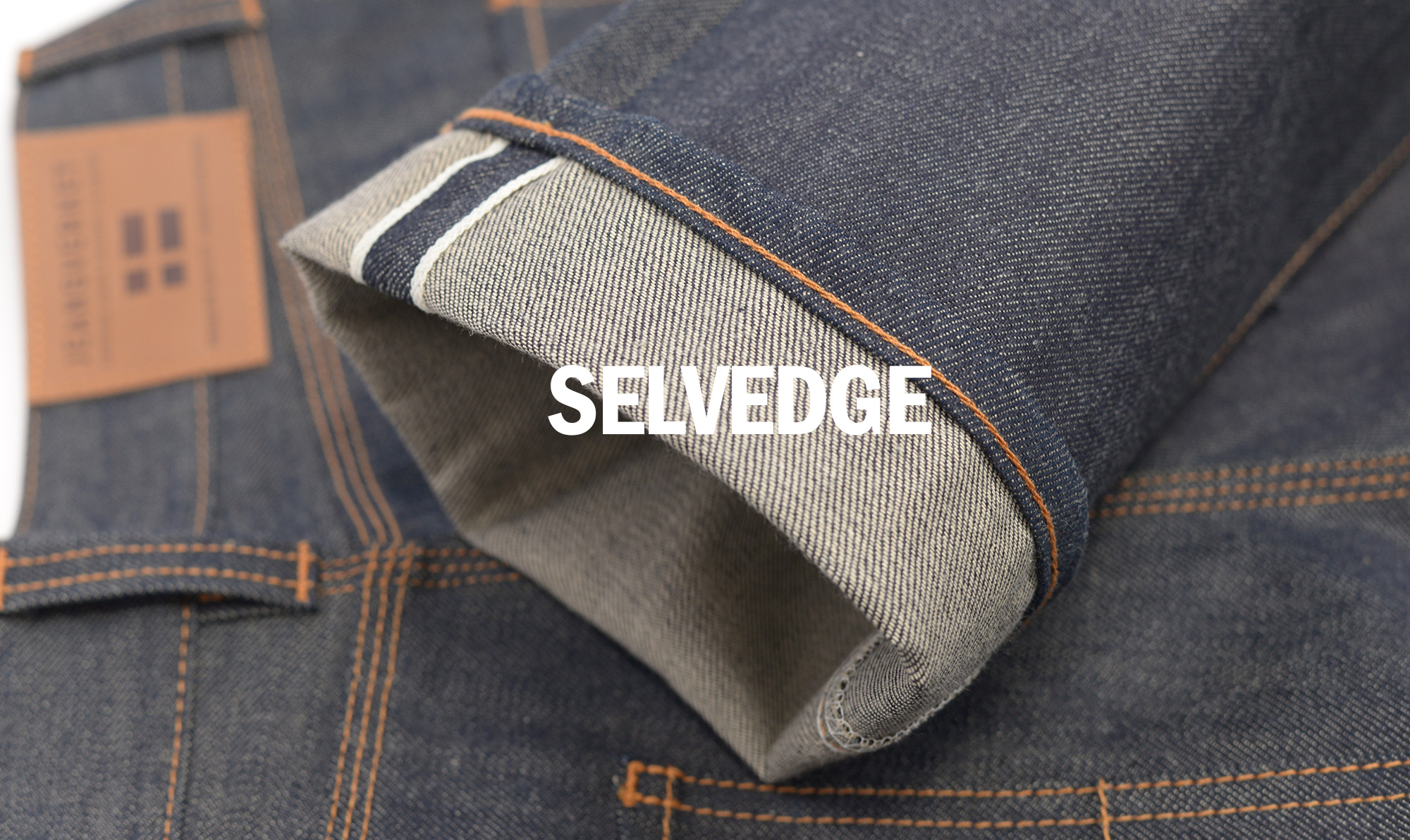
Selvedgedenim comes from old looms where the edges become firm and nice, but they were smaller so the fabrics were only about 60-80cm wide. Levi´s old selvedge jeans are characterized, for example, by a red stripe along the edges for a period.
When modern looms were developed, the old ones were gradually replaced as the new ones produced double the width at the same time.
The Japanese discovered these old looms sometime in the 1980s and liked the fine quality they wove. They gradually bought up most of what was for sale from the Americans and have developed the qualities further.
What characterizes selvedgedenim is its solid edges that are visible when you fold up the trouser legs and its raw character that shapes and wears in nicely as the trousers are used. Most jeans in selvedge are in 100% cotton and are sold completely untreated (raw denim) or possibly with a rinse to get out excess color, shrinkage and a softer pants.
What makes selvedge jeans more expensive is that you use the fabric edge for the front and back, which makes it more difficult to cut which you then have to do manually and it is not possible to put many layers of fabric on top of each other and cut with the right precision to maintain correct dimensions. . The fact that the looms also weave narrower fabrics means that you only get half as much material at a time.
In principle, all fabrics have some form of edge where they are attached to the looms, but as it has become a "look detail", you make the edges extra nice on the selvedge denim which you then use both in the trouser legs and in other decorative places such as. on a pocket or in a fly.
Read more about denim...
Selvedgedenim has today become a bit of denim's "Rolls-Royce" and they have started to make denim fabric in both recycled cotton and other environmentally friendly materials. Nowadays, there is also selvedge denim with stretch in the yarns as it has become increasingly popular.
When it comes to making good selvedge denim, there are a number of factors that affect the properties of the fabric, including the quality of the cotton, the thickness of the yarn and the weaving technique, coarse yarns generally make fabrics sparser and worse against abrasion not always the strong thick selvedge jeans that are the most durable and best even though many people want to believe it.
Other factors that affect the end result are also the type of dyeing used. Here there are a variety of dye compositions and dyeing methods that are used in connection with the production of different shades of denim blue, historically it has been "indigo" that has been used to dye the fabric blue and many still use indigo as a base when it should bring out jeans blue.
Some well-known weavers that make Japanese selvedge denim include: Kaihara, Kuroki, Kurabo, Collect (Japan blue group), Nihon Menpu, Nisshinbo, Toyoshima, but there are more in Japan who weave fine fabrics.
Cone mills North Carolina (USA) is perhaps one of the most famous weavers in history? Cone manufactured all denim for Levi Strauss Co from around 1915 until Levi´s moved production abroad, Cone remains today but production no longer takes place in the USA.
Candiani from Milan (Italy) is one of Europe's largest weavers of denim and they still produce some selvedge qualities and work very actively with the environment and sustainability. Another long-established Italian weaving mill is Berto, which also has a long history of making selvedge and denim.
When it comes to making good selvedge denim, there are a number of factors that affect the properties of the fabric, including the quality of the cotton, the thickness of the yarn and the weaving technique, coarse yarns generally make fabrics sparser and worse against abrasion not always the strong thick selvedge jeans that are the most durable and best even though many people want to believe it.
Other factors that affect the end result are also the type of dyeing used. Here there are a variety of dye compositions and dyeing methods that are used in connection with the production of different shades of denim blue, historically it has been "indigo" that has been used to dye the fabric blue and many still use indigo as a base when it should bring out jeans blue.
Some well-known weavers that make Japanese selvedge denim include: Kaihara, Kuroki, Kurabo, Collect (Japan blue group), Nihon Menpu, Nisshinbo, Toyoshima, but there are more in Japan who weave fine fabrics.
Cone mills North Carolina (USA) is perhaps one of the most famous weavers in history? Cone manufactured all denim for Levi Strauss Co from around 1915 until Levi´s moved production abroad, Cone remains today but production no longer takes place in the USA.
Candiani from Milan (Italy) is one of Europe's largest weavers of denim and they still produce some selvedge qualities and work very actively with the environment and sustainability. Another long-established Italian weaving mill is Berto, which also has a long history of making selvedge and denim.

€357
Description
Article no.: 100319
Timeless straight jeans with the classic "look" made in a Japanese 19 oz selvedge from Kurabo denim. This powerful 19 oz selvedge quality is really robust and takes a while to wear in but gets nicer and nicer with time. The original color gives the trousers a natural and genuine patina over time. Reinforced back pockets, button fly, and coin pocket, as well as extra front pocket and lining in rough canvas. Limited edition with hand stamped prints...
Measurement list JV003-Classic19
Read more about BIO-SKIN About Bio-skin

New
€290
Description
Article no.: JV003-13,75
Timeless straight pant with the classic "look" made in Italian 13.75 oz selvedge from Candiani denim. This quality is both stable and comfortable. The denim fabric comes shrink treated from the weaving mill and is a little softer than our Japanese counterpart. The original color gives the pants a natural and authentic patina over time. Button fly and coin pocket.
Measurement list JV003-Classic13,75
Read more about BIO-SKIN About Bio-skin