
Circularity has remained the basis for everything we do at Jeansverket. With sustainability as a keyword, we can help encourage more conscious consumption and reduce the impact of fashion on our planet. The journey is ongoing, and we learn new ways to improve ourselves every day.
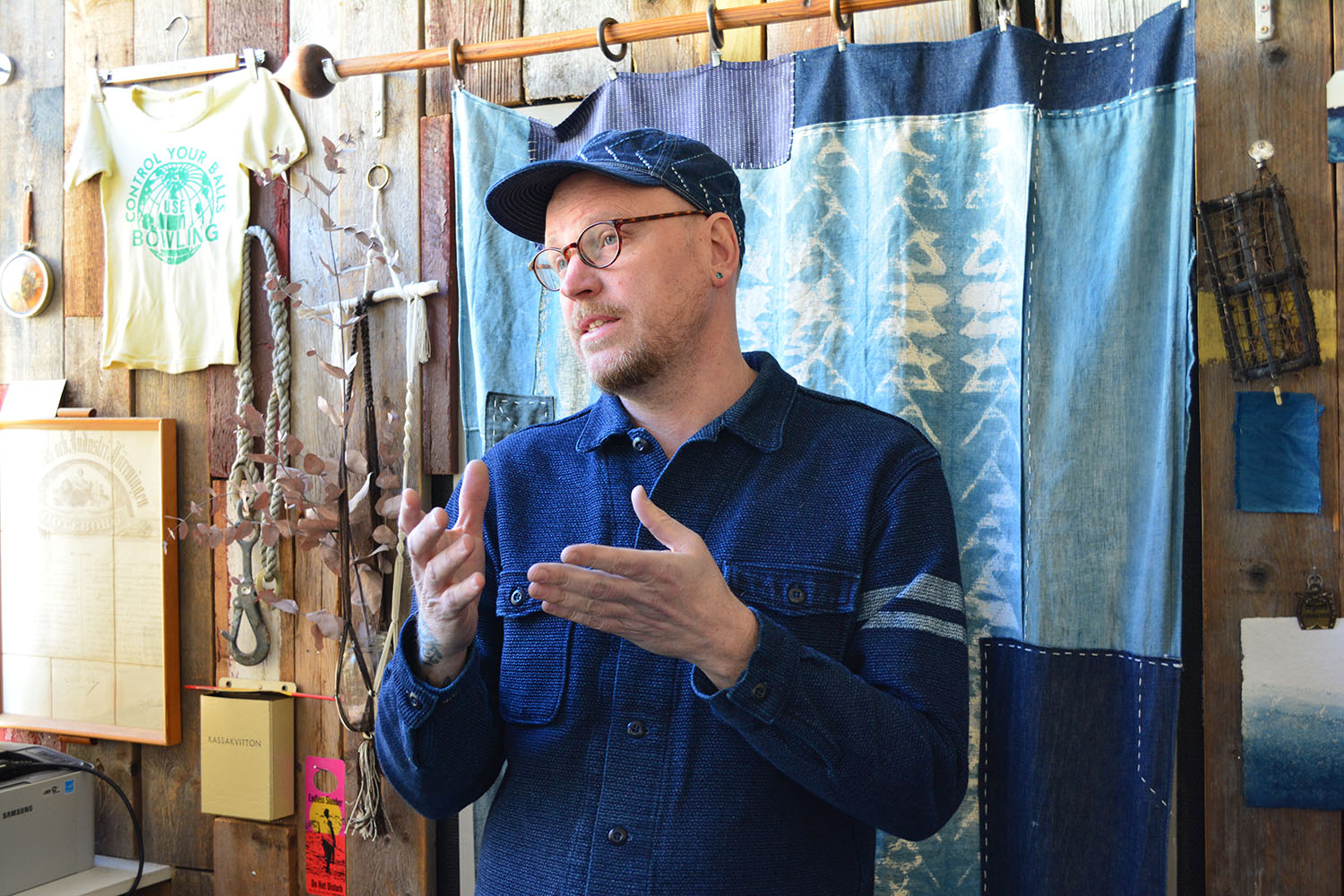
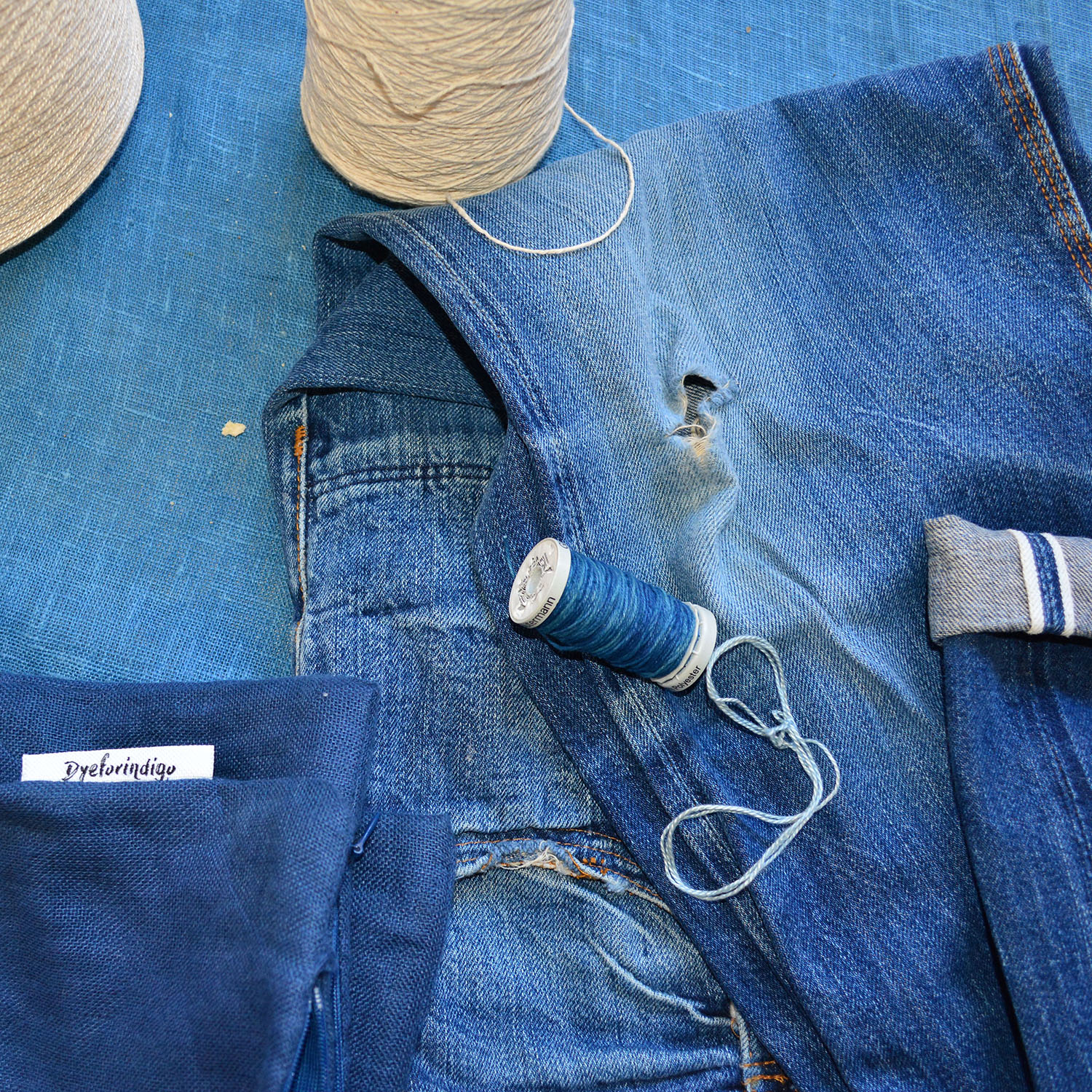
The most sustainable value is to make clothes with a long lifespan. Our jeans are designed to be worn a lot and for a long time. Even if the sewing is of the highest class, wear and tear is inevitable. The more you wear your jeans, the closer the day comes when a rip occurs. Fortunately, at Jeansverket we offer free repairs on all our jeans. To learn more about different mending techniques, we visited our friend Johan Åberg's studio, dyeforindigo in Gothenburg.
Johan grew up in Dalsjöfors outside Borås and had a proud long history of the Swedish textile industry around the corner. After almost 20 years in the fashion industry, Johan had seen most of the dark side of the fashion industry. Large volumes, poor qualities, and a not so sustainable consumption behavior. Johan felt that he had seen enough, so he started the store Göteborg Vintage in 2014. He used all his experience and created a meeting place with focus on craftsmanship, quality and unique clothes. In other words, far from the fashion industry he had left behind.
In 2016 he founded Dyeforindigo and today he hosts workshops in indigo dyeing and ancient Japanese repair techniques such as Sashiko. He also gives lectures in denim, indigo and sustainability. When Johan was running Göteborg Vintage, he discovered several smart ways to repair his vintage clothes. Then another idea popped into his head and the repair shop with Sashiko was born.
"I fell in love with the techniques, patchwork and the little driving stitches."

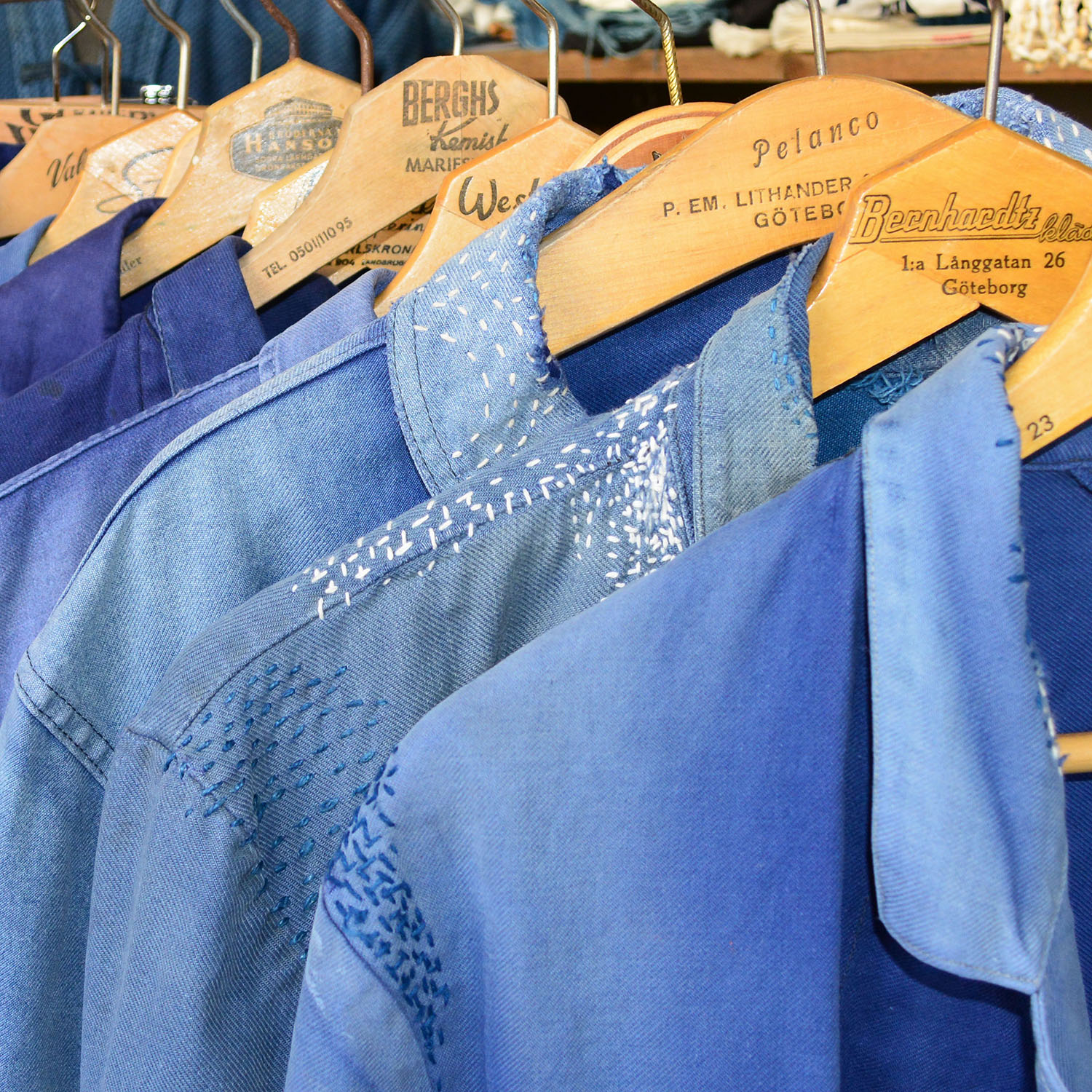
Sashiko comes from Japan and is a form of decorative reinforcement seams that has been around since the 17th century. The embroidery technique was used to strengthen the clothes. Worn clothes were joined together to create new garments by using simple running seams in different patterns. Then it was born of a practical need. But now Johan is using it to further push his idea of sustainability.
"Hopefully, I have encouraged people to consume less, reuse and recycle."