
what is denim ?
Denim is simply put the fabric that jeans are generally made of, characteristic of denim fabric is its blue right side and undyed wrong side.
The name of the denim fabric "Denim" comes from the city of Nimes, which already in the 18th century made cotton fabrics in blue tones of twill weave or twill (diagonal weave) as it is usually said today! "Indigo" which was cheap and gave a nice blue color was used extensively and comes from the indigo plant.
Sailors from Genoa were called "Jeans" by the Americans when they came with the boats and their trousers are believed to be a model for Levi Straus and Jacob Davis when they developed their first "gold digger trousers" in the early 1870s.
At first, the durable work trousers were made of hemp in its brown natural color, but later Levi´s switched to blue cotton fabric in the manufacture that they called "Serge de Nimes" (twill from Nimes) it was simplified by the Americans and became "Denim" instead. This combination became very popular as it was softer than hemp, finer color and still durable.
In the 1930s, the term Jeans came to Europe and only in the late 1940s did men's jeans begin to be made in Europe.
Jeans became a fashion item in connection with movie stars wearing them on the white screen and they became a symbol of freedom for the American lifestyle that spread across Europe.
Today, denim is a completely separate segment in the clothing industry and in principle all major fashion brands have clothing in denim.
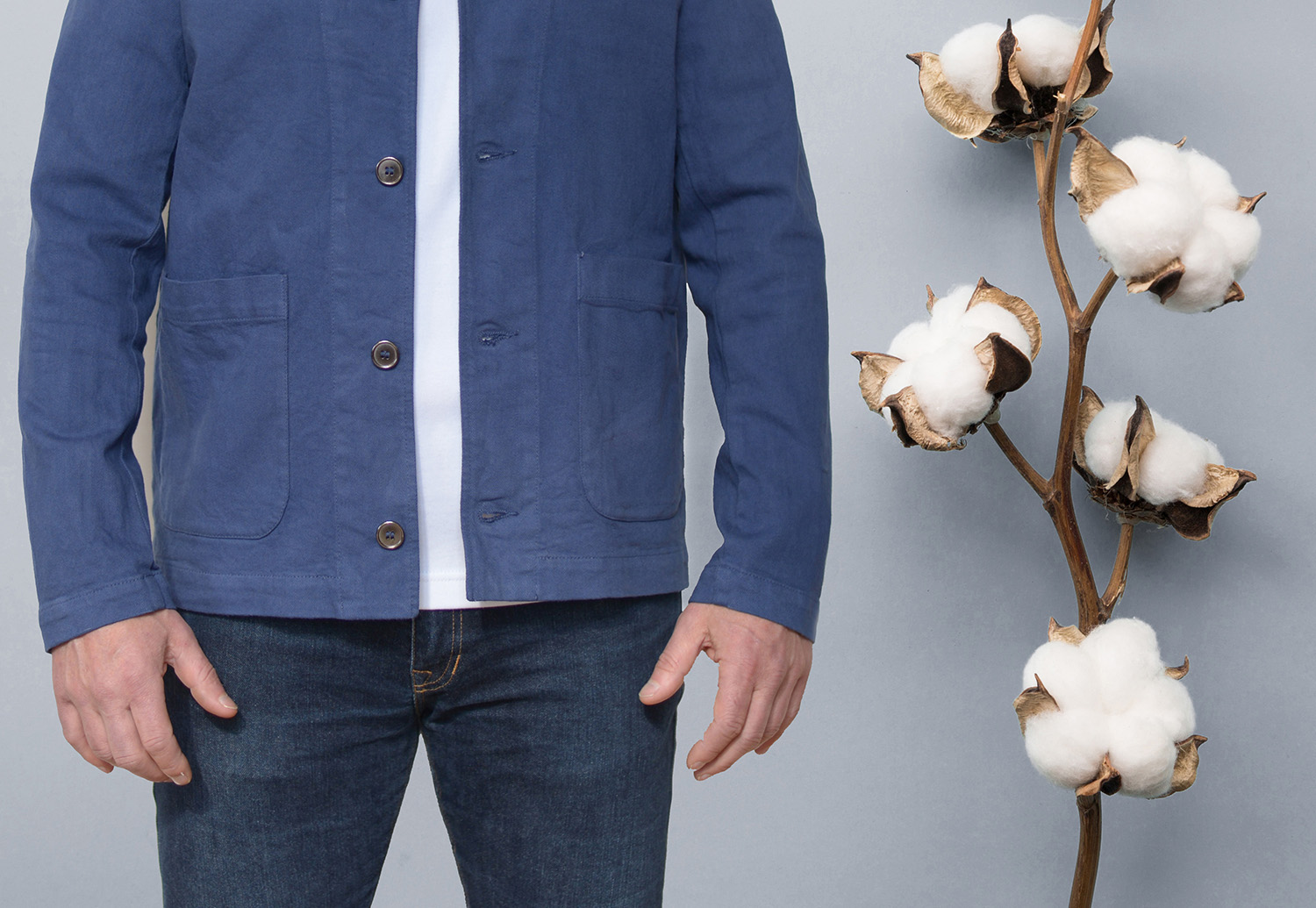
Denim is a woven fabric that is a twill, made of cotton yarn.
You often use colored warp and uncolored weft, which gives the lighter and diagonal pattern on the back that you recognize in denim.
Twill is woven on the diagonal and gives a certain natural flex and mobility that is not found in, for example, cloth shaft, including canvas fabric that is woven perpendicular to each other. In combination with cotton that was soft and comfortable to wear, denim quickly became popular in workwear, when the synthetic materials made their entrance, the twill was soon upgraded with polyester in the cotton yarns and you got a more durable material than before, which meant that the workwear was increasingly made with polyester and cotton blends. Polyester was significantly cheaper to produce and also more durable. The downside was that the work clothes became a little stiffer and less soft and comfortable to wear.
Today there are many different kinds of denim, classic cotton denim that is made of just 100% cotton, stretch denim in different degrees of stretch where the majority of the material is still cotton but it can be between 1-10% stretch in the yarns which makes them elastic and comfortable . There are also blends with polyester that will make the denim more durable when it stretches. Read more about stretch denim here
New natural materials have begun to enter the denim, such as hemp or cellulose fibers, it can consist of different types of wood or recycled textiles.
The cotton's environmental impact and rising price means that research on alternative and more sustainable materials is intensified, and the result of this is now gradually coming to market in new denim fabrics where recycled cotton is mixed with, for example, cellulose. There is still a difference between denim and denim, but if you compare today's alternative durable denim fabrics with traditional ones, there is little difference and many do not even think about it.
Selvedge Denim what is it? Denim with the firm edge that you weave on old looms, you can briefly say, if you want to read more about selvedge denim, you can read our separate page about this.Many people wonder what selvedgedenim is for something? Here we have written a bit about the subject and what it comes from!
The name of the denim fabric "Denim" comes from the city of Nimes, which already in the 18th century made cotton fabrics in blue tones of twill weave or twill (diagonal weave) as it is usually said today! "Indigo" which was cheap and gave a nice blue color was used extensively and comes from the indigo plant.
Sailors from Genoa were called "Jeans" by the Americans when they came with the boats and their trousers are believed to be a model for Levi Straus and Jacob Davis when they developed their first "gold digger trousers" in the early 1870s.
At first, the durable work trousers were made of hemp in its brown natural color, but later Levi´s switched to blue cotton fabric in the manufacture that they called "Serge de Nimes" (twill from Nimes) it was simplified by the Americans and became "Denim" instead. This combination became very popular as it was softer than hemp, finer color and still durable.
In the 1930s, the term Jeans came to Europe and only in the late 1940s did men's jeans begin to be made in Europe.
Jeans became a fashion item in connection with movie stars wearing them on the white screen and they became a symbol of freedom for the American lifestyle that spread across Europe.
Today, denim is a completely separate segment in the clothing industry and in principle all major fashion brands have clothing in denim.
Denim is a woven fabric that is a twill, made of cotton yarn.
You often use colored warp and uncolored weft, which gives the lighter and diagonal pattern on the back that you recognize in denim.
Twill is woven on the diagonal and gives a certain natural flex and mobility that is not found in, for example, cloth shaft, including canvas fabric that is woven perpendicular to each other. In combination with cotton that was soft and comfortable to wear, denim quickly became popular in workwear, when the synthetic materials made their entrance, the twill was soon upgraded with polyester in the cotton yarns and you got a more durable material than before, which meant that the workwear was increasingly made with polyester and cotton blends. Polyester was significantly cheaper to produce and also more durable. The downside was that the work clothes became a little stiffer and less soft and comfortable to wear.
Today there are many different kinds of denim, classic cotton denim that is made of just 100% cotton, stretch denim in different degrees of stretch where the majority of the material is still cotton but it can be between 1-10% stretch in the yarns which makes them elastic and comfortable . There are also blends with polyester that will make the denim more durable when it stretches. Read more about stretch denim here
New natural materials have begun to enter the denim, such as hemp or cellulose fibers, it can consist of different types of wood or recycled textiles.
The cotton's environmental impact and rising price means that research on alternative and more sustainable materials is intensified, and the result of this is now gradually coming to market in new denim fabrics where recycled cotton is mixed with, for example, cellulose. There is still a difference between denim and denim, but if you compare today's alternative durable denim fabrics with traditional ones, there is little difference and many do not even think about it.
Selvedge Denim what is it? Denim with the firm edge that you weave on old looms, you can briefly say, if you want to read more about selvedge denim, you can read our separate page about this.Many people wonder what selvedgedenim is for something? Here we have written a bit about the subject and what it comes from!